




















What Games Should You Play Before Metroid Ravenous?
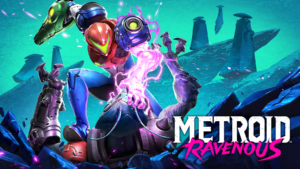
Metroid Ravenous, the sixth chapter of Samus’s story in the 2D Metroid series, was announced last week in the most recent Nintendo Direct. Fans in the Metroid community were overjoyed, but we weren’t alone. An unprecedented amount of newcomers with little to no experience also got hooked on the trailer, eager to try out the series for the first time. If you’re one of those people reading, we just want to personally say…
“Hello, and welcome to the Metroid series!”
A lot of folks have understandably been asking where to start for a series with such a rich history like Metroid, so we prepared some recommendations to check out going into Metroid Ravenous based on a wide range of criteria.
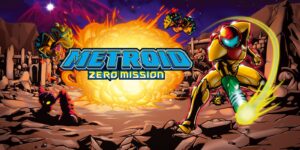
Metroid: Zero Mission (Metroid I)

Metroid: Zero Mission is a Game Boy Advance remake of the very first Metroid title released for the NES and Famicom Disk System. It is chronologically the first entry in the Metroid timeline and introduces the Chozo, a technologically advanced civilization heavily tied with Samus Aran’s past whose presance lingers over the entire series.
What really makes this entry fantastic for a first time player however is the gameplay. While Zero Mission might not have all the quality of life hallmarks of the next title in our list, it still has enough to ease the burden of fighting the controls for someone unfamiliar with the Metroidvania genre. It also has gameplay that is adaptive to whatever you want out of the experience. Want a fairly onboard-friendly experience? Follow the main path and use the Chozo Statues to set a marker towards your next objective. Don’t want your hand held at all? You can ignore most of the Chozo Statues to keep your map marker free, and even go off the beaten path to collect items and fight bosses out of order!
We also recommend checking out our Metroid: Zero Mission Walkthrough. It provides a detailed 100% playthrough across the main path, as well as sub-sections on advanced techniques, sequence breaking, and shortcuts to get the most out of the game! Lastly, Metroid: Zero Mission is one of the shortest titles to complete. A first-time playthrough will likely take you about 4-6 hours, though your mileage may vary. This makes the game an excellent “dip your toes into the pool” type of experience to see if 2D Metroid resonates with you.
Where to Play
The easiest way to experience Metroid: Zero Mission is on the Game Boy Advance Classics app through the Nintendo Switch Online + Expansion Pack service. This will get you access to the game along with several other 2D Metroid titles, and includes save states, rewinding and remappable controls for all of them. Otherwise, the only way to continue accessing the game is by buying a second hand cartridge online and playing it on the original hardware.
Metroid Dread (Metroid V)

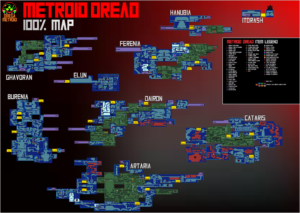
Metroid Dread is the most recent release in the 2D Metroid series, serving as a sequel to Metroid Fusion released nineteen years prior. It takes place directly before the upcoming Metroid Ravenous, which builds off many of the revelations introduced in the climax of Dread’s story and gameplay. This title also has so much fascinating history tied to it, but that’s a discussion for another day.
Metroid Dread is developed by MercurySteam, the same studio behind Metroid Ravenous. As such, Dread is a great entry point not just because the story leads directly into Ravenous, but because it will likely be the closest feeling to the gameplay of it as well. Good news for you, the gameplay is REALLY good. Arguably some of the series’ best.
Metroid Dread can be a bit of a challenge for newcomers, but the introduction of “Rookie Mode” in the game’s first free update along with a forgiving checkpoint system for the game’s bosses and E.M.M.I. zones make it less daunting to retry these segments. Nintendo Switch 2 owners can also play this title with noticeably improved loading times! Much like Zero Mission, we also recommend checking out our dedicated Metroid Dread Walkthrough, which takes the player along for a 100% playthrough from start to finish!
Where to Play
Metroid Dread is available for the Nintendo Switch, and also has a free demo available that takes you through a decent chunk of the game!
So you’ve tried out Metroid: Zero Mission and/or Metroid Dread and had a blast. Fantastic! But now you have a new problem; you’re hooked! You need more! Your insatiable hunger for Metroid content has become RAVENOUS! Well luckily for you, Metroid is a series spanning 40 years, and has LOTS more to offer beyond the last two titles we discussed. From here, there are several different choices you can make, but we’ll highlight some special entries and why you might want to explore them beforehand.
Metroid: Samus Returns / AM2R (Metroid II)

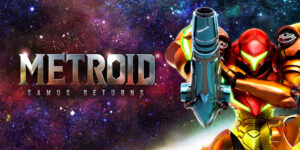
Metroid: Samus Returns is a Nintendo 3DS remake of Metroid II: Return of Samus for the Game Boy. It’s the first Metroid title developed by MercurySteam, and is arguably the single most important event in the entire Metroid timeline. I’m dead serious. This story alone, as simple as it is, has ramifications that can be felt in every single mainline entry that follows, Metroid Ravenous included. It features the introduction of several gameplay staples and quality of life features such as 360° aiming, the melee counter-attack and map pins. As if that’s not enough though, you guessed it, you can check out the Metroid: Samus Returns Walkthrough to navigate the labyrinth of SR388 with all items in tow!
Meanwhile AM2R (Another Metroid 2 Remake) is a fan game that remakes Metroid II in a similar style to how Zero Mission remade the original Metroid game. It might seem weird that we’re also recommending a fan game alongside official releases, but the thing about AM2R is that it’s actually THAT good. So good, that fans still debate today on whether this or Samus Returns is the superior Metroid II remake. Frankly you can’t go wrong with either title, as they both provide wholely unique, but equally quality experiences. In the event you do decide to give AM2R a spin, you can use our 100% Map to help navigate the terrain!
Where to Play
Unfortuantly, the only easily accessible way to play this entry in the timeline is through the original Metroid II: Return of Samus game on the Game Boy Classics app through Nintendo Switch Online. While we here are definitive Metroid II enjoyers and sing its praises, it’s also undoubtedly a very difficult title to get into with so many modern gaming conventions not yet implemented, and not something we would consider “newcomer-friendly”. If you do choose to play through the original game however, we do have our Metroid II: Return of Samus Walkthrough to help you out. If there was ever a time to use the walkthrough, this is it!
Meanwhile, Metroid: Samus Returns is still trapped on the Nintendo 3DS. It is criminal that this experience has yet to be ported over to the Nintendo Switch for others to experience more easily, but that’s just the reality of where we’re at. Furthermore, AM2R was infamously hit with a cease-and-desist shortly after its release in 2016, meaning there’s no longer a central download location to access it anymore. If you don’t have a 3DS, aren’t knowledgeable or comfortable with emulation, or don’t know how to use google searches optimally, you’re out of luck with experiencing either of these remakes.
Super Metroid (Metroid III)

Widely considered by many to be one of the greatest games of all-time, Super Metroid is an incredible experience that still holds up today. This game definitely has some quirks known to trip up new players, most notably the floaty aerial physics and the weapon switching system. If you’re able to adjust to it though, Super Metroid is the gold standard in map design, player expression, and visual storytelling. As the third chapter in the 2D Metroid series, Super Metroid also gives a nice recap on the events of the previous games which is a great way to quickly get up to speed with where the story is at to this point. Of course, if the experience is too daunting, you can visit our Super Metroid Walkthrough which will guide you through Planet Zebes from start to finish without missing a single item along the way!
Where to Play
Super Metroid is a very accessible title that can be played through numerous means. The easiest way to play this, like most of the other titles we discuss today, is through the Nintendo Switch Online service via the Super Nintendo Classics app. Super Metroid is the only Metroid title ever to have fully remappable controls in-game. Either way, the app will still give you the option to remap buttons through its own menu as well as the inclusion of save states and rewinding.
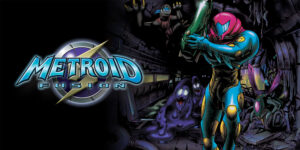
Metroid Fusion (Metroid IV)

Metroid Fusion is the fourth chapter in the 2D Metroid series, taking place between Super Metroid and Metroid Dread. While Metroid II influences every title afterwards, Fusion in particular opens up with what will become the single biggest consequence of that game; that being Samus taking the Metroid vaccine to combat the X Parasite that infected her. This vaccine alters Samus’s DNA to give her various innate properties of the Metroids themselves. Fusion is the start of that exploration, with Dread and soon Ravenous continuing that story of Samus’s metamorphosis.
Metroid Fusion is a bit more linear than typical 2D Metroid adventures, featuring dialogue and waypoints that help point the player in the right direction with little room to improvise. On one hand, this can be very nice for new players who need some extra help with navigation. On the other hand, some folks in the Metroid community feel like this linearity takes away some of the magic that makes the Metroid experience so unique. Regardless which camp you fall in, most folks still ultimately enjoy Fusion and have something nice to say about it, so it’s definitely a great entry to try no matter what. And yes, you can visit the Metroid Fusion Walkthrough if you’re still having trouble 100%’ing the BSL station.
Where to Play
Much like Metroid: Zero Mission, the easiest way to play Metroid Fusion is on the Game Boy Advance Classics app through the Nintendo Switch Online + Expansion Pack service. Like the rest of the Switch Online offerings, this will get you remappable controls, save states and rewinding.
Metroid Prime

The final game we’ll talk about, Metroid Prime, is obviously quite unique from the others we’ve featured here. Metroid Prime is a 3D first person adventure, not a 2D sidescroller. It’s a very different experience, but still undeniably Metroid. If you’re solely trying to play games that lead into Metroid Ravenous, this one you can skip. Not only is the gameplay itself a huge departure, but the story itself is largely irrelvant to the 2D entries, acting as its own self-contained narrative taking place between the first two Metroid games.
However, if you are eager to explore everything the Metroid series has to offer regardless of how much or little it prepares you for Ravenous, this is a MUST PLAY! There really isn’t any game quite like Metroid Prime other than its sequels. Rather than the fast-paced gameplay of the 2D series, the Prime games offer slower and more methodical gameplay that’s built around engrossing the player into some of the most incredible atmospheric immerson you’ll ever experience in a videogame. It is something truly magical, beyond words.
Where to Play
Without a doubt, Metroid Prime Remastered for the Nintendo Switch is the definitive Metroid Prime experience. You get access to brand new dual analogue controls to give the game a more modern feel, as well as Wii-pointer style controls for the Joycons, and even a layout mimicking the original tank controls from the GameCube release.
Of course, the biggest change is the completely rebuilt visuals; taking an already impressive looking title from 2002 and turning it into one of the best looking games on the Nintendo Switch. It is absolutely jaw dropping how gorgeous this game looks!
Metroid Prime Remastered retails for $39.99 USD, which is an absolute steal. Stop reading this and go buy this game right now!
We here at Omega Metroid are all excited for Metroid Ravenous, and we’ll be pumping out content over the next few weeks both on the podcast and on the website to hype up fellow Metroid fans and encourage newcomers to give the series a shot. If you’re a new fan who played one of the games we suggested for the very first time, tell us about it on our Bluesky and Discord social media channels!
For more information on Metroid Ravenous and our related projects, keep it locked-on to OmegaMetroid.com!

Doominal Crossing is a Website Editor at Omega Metroid & one of the big 3 on the Omega Metroid Podcast. Don’t let the name fool you, Metroid comes first before anything else! When not talking endlessly about his love for the series, you can find him in the studio making music that’s probably related to it in some way.


You May Also Like

Join the Speedrunning Hall of Fame November 4th-6th As They Race Metroid Dread and More In Suport of the National Alliance on Mental Illness

Metroid Musing: Should Metroid Prime 4 Include More Than Four Beams and Visors?
